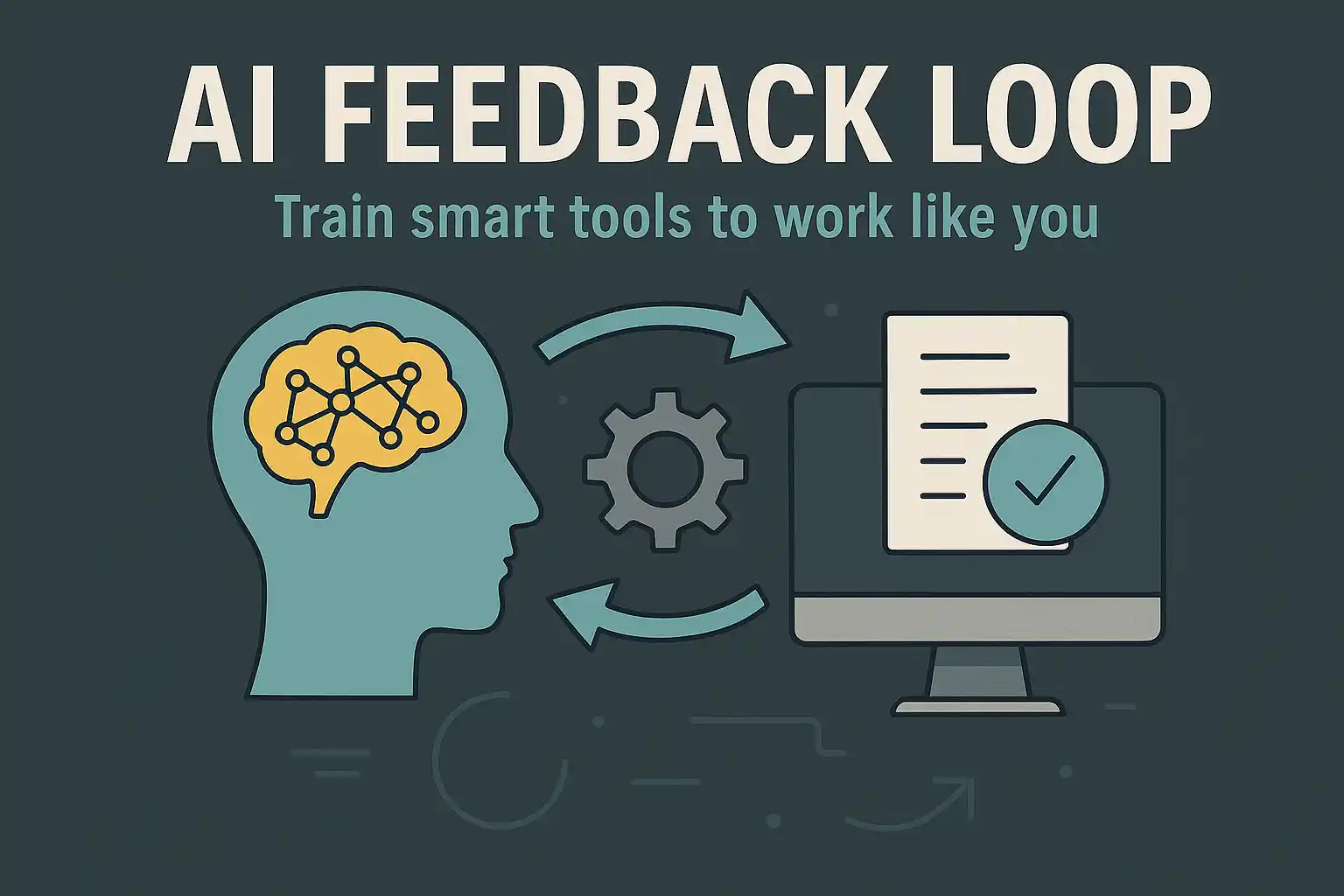
2. Why the Feedback Loop Is the Missing Ingredient
I’ll be honest—the moment I started using AI tools, I expected them to read my mind. I thought I’d type a few words, and voilà—the perfect email, landing page, or headline would appear. It didn’t take long before I realized something was missing. Not in the tools, but in how I was using them. That missing piece? The feedback loop.
Most entrepreneurs abandon AI tools too early because they don’t realize that the real magic happens after the first draft. The first result is rarely the best—but it’s the beginning of a powerful loop. And that loop, when you learn to use it, separates amateurs from entrepreneurs who actually get results.
AI tools that drive results need feedback to improve performance.
Think about how humans grow. We try, we fail, we learn. AI is similar. Whether it’s ChatGPT, Jasper, Claude, or Midjourney—the tool gives you a starting point. What you do next tells it what matters. When you respond with:
- “Make it shorter,”
- “Add more emotion,”
- “Focus on benefit X,”
…you’re creating a feedback loop. And the more consistently you guide it, the closer its output gets to your voice, your values, and your goals.
The loop looks like this: Prompt → Output → Feedback → Refined Prompt
Here’s a simple example using an AI content assistant:
- You prompt: “Write a blog intro about AI tools that drive results.”
- AI replies: “In today’s fast-paced digital age…”
- You respond: “Too generic. Make it more personal and practical.”
- AI revises: “When I first started using AI for my business…”
Now we’re getting closer to your tone. That’s the loop in action.
It’s not just about clicking “regenerate”—it’s about refining your intent, then directing the tool with purpose.
Without the feedback loop, AI tools just mirror the crowd.
Here’s the danger: If you don’t guide your tools, they default to bland, surface-level content that feels like it was written by the internet itself. You end up with copy that sounds okay but doesn’t convert. It lacks soul, specificity, and direction.
That’s why many users say, “This tool is overrated.”
No—it’s just undertrained.
The truth is, AI tools that drive results behave more like interns than mind readers. You wouldn’t hire someone, give them zero instructions, and expect perfection. You coach them. You give feedback. You mold their process over time. That’s exactly what the AI needs too.
Reflection from the trenches :
I remember testing a new AI email writer last year. The first three drafts? Robotic. Sounded like they came straight from a corporate handbook. But I didn’t give up. I gave feedback—“use a story,” “drop the jargon,” “shorten the intro.” On day four, something clicked. The tool began sounding like me. My list responded too—open rates jumped by 18%, replies tripled.
That’s when I realized: The difference wasn’t the tool. It was the training.
Actionable Tip: Create a Personal Feedback Journal
If you want to speed up this loop, here’s what I recommend:
Start a feedback journal where you copy/paste prompts and note what worked, what didn’t, and why. Every successful entrepreneur I know who’s leveraging AI effectively has some form of this.
Ask yourself:
- Did the tone match your brand?
- Did the message support your CTA?
- Would your audience trust it?
Document these answers. Use them to tweak your next prompt. You’ll be shocked how quickly your tools start behaving like your best copywriter.